


Uncategorized
What Are the Best Facial Treatments for Acne?
Jul
Acne rarely behaves the same way twice. One month it is clogged pores across the forehead, the next it is tender hormonal breakouts along the jaw, followed by the stubborn post-acne marks that linger long after the spots have settled. That is why, when clients ask what are the best facial treatments for acne, the real answer starts with your skin condition, breakout pattern and sensitivity level – not a one-size-fits-all menu.
A good acne facial should do more than leave your skin feeling clean for a day or two. It should help reduce congestion, calm active inflammation, support healing and strengthen the skin so that future breakouts are less frequent and less severe. The best treatments are targeted, professionally assessed and paired with sensible home care.
What are the best facial treatments for acne-prone skin?
For most acne-prone skin, the most effective facials fall into a few clear categories: deep-cleansing facials for congestion, exfoliating treatments for blocked pores, calming facials for inflamed acne, and advanced technology-based treatments for persistent breakouts and acne marks. Each has a place, but not every skin type benefits from the same intensity.
If your main concern is blackheads, whiteheads and a rough, uneven texture, a deep-cleansing facial with professional extraction can be very helpful. This type of treatment softens hardened sebum, clears pore blockages and removes impurities more thoroughly than at-home cleansing. Done properly, extraction should be precise and controlled. Overly aggressive squeezing can irritate the skin, worsen redness and increase the risk of marks, so therapist technique matters.
Chemical exfoliation is another strong option, particularly for acne caused by congested pores and excess oil. Mild acid-based treatments, often using salicylic acid or other resurfacing ingredients, help loosen dead skin cells and reduce the build-up that contributes to breakouts. Salicylic acid is especially useful because it is oil-soluble, which means it can work inside the pore lining. The trade-off is that overdoing exfoliation can leave skin tight, dry or reactive, especially if you are already using retinol or prescription acne products at home.
For red, sore or easily aggravated breakouts, a calming facial can be the better first step. Many people assume acne always needs stronger treatment, but inflamed skin often responds better to a gentler approach that focuses on reducing heat, soothing irritation and repairing the skin barrier. If your skin feels sensitive, peels and intense scrubs can make things worse before they make anything better.
The best facial treatments for acne by concern
For clogged pores and blackheads
A deep-cleansing facial with steam preparation, careful exfoliation and professional extraction is often the most suitable place to begin. This treatment helps remove congestion from the nose, chin and forehead while improving the absorption of post-facial serums and masks. It is especially useful for oily or combination skin that feels bumpy even when there are not many inflamed spots.
That said, results depend on consistency. One facial can improve the look of congestion, but if your pores clog easily, you will usually need regular maintenance and a proper cleansing routine at home.
For inflamed spots and recurring breakouts
When acne is active, angry and uncomfortable, antibacterial and soothing treatments tend to work best. These facials often combine gentle cleansing, anti-inflammatory masks and technology such as LED light therapy to calm the skin. Blue LED is commonly used to target acne-causing bacteria, while red LED can support healing and reduce visible inflammation.
This approach suits adults who want visible improvement without harsh downtime. It is not an instant fix for severe acne, but it can be an excellent support treatment, particularly for those dealing with recurring monthly flare-ups or stress-related breakouts.
For acne marks and uneven texture
Once active acne is under better control, resurfacing treatments become more relevant. Mild chemical peels, enzyme facials or other skin-renewing treatments can help improve post-acne marks, dullness and uneven texture. These are often the facials people need after breakouts, rather than during the most inflamed stage.
Timing matters here. If you start resurfacing too early, when the skin is still irritated, you may prolong sensitivity. A professional assessment helps determine whether your skin needs calming first or whether it is ready for a more corrective treatment plan.
For sensitive adult acne
Adult acne is often complicated by dehydration, a weakened skin barrier or early signs of ageing. In these cases, the best facial is usually one that balances purification with hydration. Skin that feels stripped will often produce more oil or become more reactive, which creates a frustrating cycle.
A well-designed acne facial for sensitive skin should cleanse thoroughly, but also restore comfort. Look for treatments that avoid heavy abrasion and instead use gentle exfoliation, lightweight hydration and soothing finishing products.
Which advanced treatments can help acne?
Technology-led facials can be particularly useful when standard cleansing facials are not enough. LED light therapy is one of the most approachable options because it is comfortable, non-invasive and suitable for many skin types. It works best as a series rather than a one-off treatment.
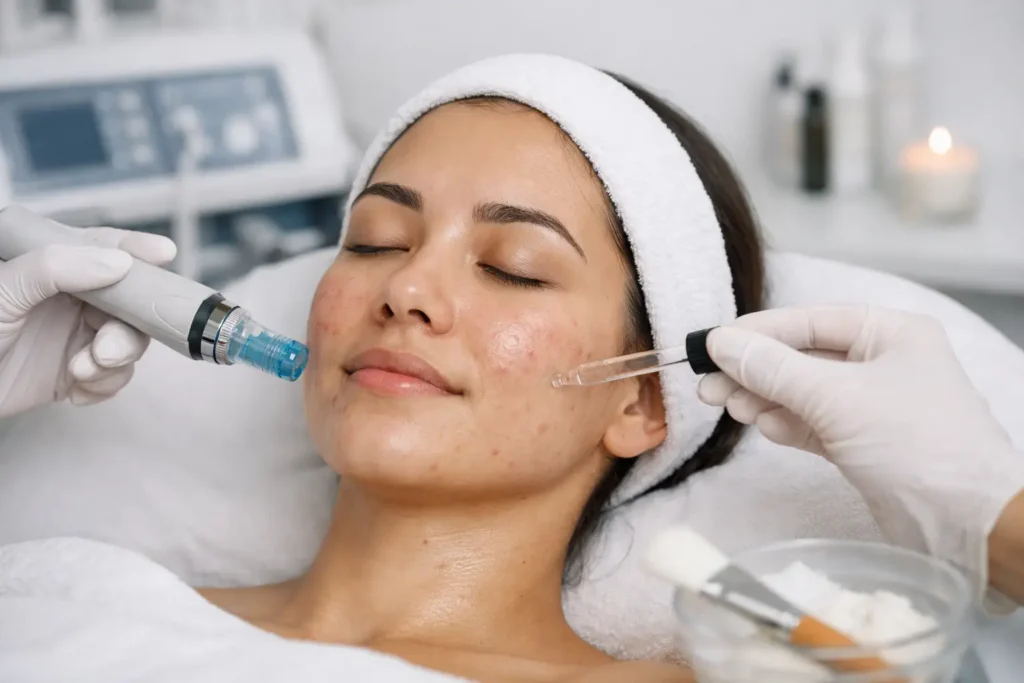
Hydra-style exfoliating facials can also support acne-prone skin when customised carefully. These treatments combine cleansing, exfoliation and suction-based pore clearing, which can leave skin clearer and smoother with minimal downtime. They are not suitable for every inflamed acne condition, though, especially if the skin is very tender or compromised.
For more stubborn texture issues or post-acne scarring, stronger clinical treatments may be recommended, but these sit in a different category from routine salon facials. For many clients, it is wiser to first bring breakouts under control with consistent facials and home care before moving into more intensive correction.
What to expect from an acne facial
A professional acne facial should begin with consultation, not assumptions. Your therapist should look at where your breakouts are occurring, how inflamed they are, whether your skin is oily or dehydrated, and what products you are already using. This is especially important for adult clients who may be balancing acne concerns with pigmentation, sensitivity or ageing skin.
During treatment, your skin may go through deep cleansing, exfoliation, extraction, a treatment mask and targeted finishing care. Some redness after extractions can be normal, but your skin should not feel traumatised. A results-oriented treatment still needs to respect the skin.
Afterwards, there is usually a short period where your skin is settling. You may be advised to avoid heavy makeup, intense exercise or strong active ingredients for a day or two, depending on the treatment. This aftercare makes a difference.
How often should you get facials for acne?
It depends on the severity and type of acne. For congested skin, a facial every three to four weeks can help keep pores clearer and support skin turnover. For active acne, some clients benefit from an initial course of regular treatments before moving to maintenance.
More frequent does not always mean better. If your skin is reactive, over-treating it can lead to sensitivity and rebound oiliness. The best approach is a treatment schedule that gives your skin time to respond without overwhelming it.
Choosing the right provider matters
When deciding what are the best facial treatments for acne, the treatment itself is only half of the picture. The quality of consultation, hygiene standards, therapist skill and willingness to personalise the session all affect your results.
A good provider will explain what your skin needs in clear, reassuring terms. They should also be honest about limits. If your acne appears severe, cystic or medically driven, a facial may help support the skin, but it may need to sit alongside medical advice rather than replace it.
For clients who want a comfortable and results-focused experience, this balance matters. You should feel cared for, not rushed into the strongest option on the menu. At Eros Beauty, that principle is central to creating treatment plans that feel both effective and approachable.
The role of home care between treatments
Even the best facial cannot compete with daily habits that keep triggering congestion. If you are investing in professional treatments, your cleanser, exfoliation routine, moisturiser and sun protection should all support the same goal.
Acne-prone skin often does best with consistency rather than excess. A gentle cleanser, a suitable treatment serum, lightweight hydration and daily SPF are usually more effective than a shelf full of harsh products. Picking at spots, sleeping in makeup and constantly changing products will slow progress no matter how good the facial is.
The best acne facial is the one that suits your current skin, not the one that sounds the most powerful. Some complexions need deep extraction, some need exfoliation, and some need calming support before anything corrective begins. When treatment is chosen thoughtfully, acne care becomes less about chasing quick fixes and more about helping your skin return to a clearer, healthier balance – comfortably, gradually and with confidence.