


Uncategorized
Eyebrow Embroidery vs Microblading: Which Suits You?
Jul
A well-shaped brow can make the whole face look more rested, balanced and defined, even on days when you prefer minimal make-up. Yet choosing between eyebrow embroidery vs microblading can feel confusing, particularly when both treatments are described as natural-looking, semi-permanent brow enhancements. The best choice depends less on the trend and more on your skin type, existing brow hair, desired finish and willingness to follow careful aftercare.
Eyebrow embroidery vs microblading: are they the same?
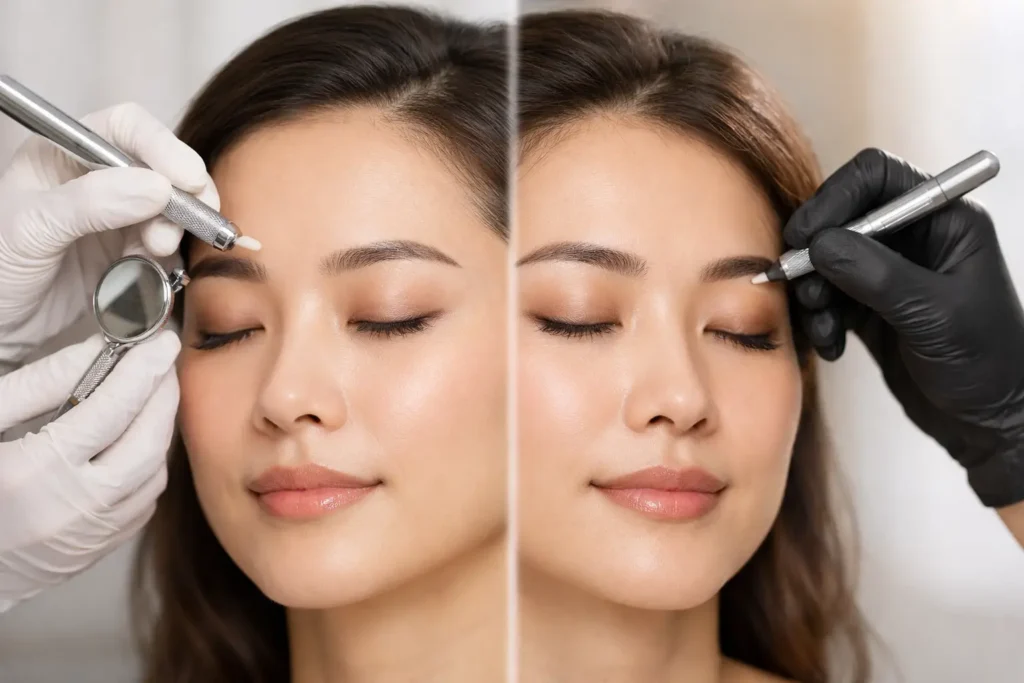
The terms are often used interchangeably, especially in Singapore’s beauty industry, but they do not always describe exactly the same technique. Eyebrow embroidery is a broader term for implanting pigment into the upper layers of skin to enhance brow shape, density and colour. It may refer to fine hair strokes, soft shading, powder effects or a combination of these methods.
Microblading is one specific form of eyebrow embroidery. A trained artist uses a handheld tool with very fine needles arranged in a blade-like row to create tiny, hair-like strokes. Pigment is placed manually along these strokes, giving the impression of fuller natural brow hairs.
This distinction matters because one salon’s “eyebrow embroidery” may mean microblading, while another may offer machine-created hair strokes, ombré shading or a mixed brow technique. Rather than selecting a treatment solely by name, ask what tool will be used, what finish is intended and which method is suitable for your skin.
How the techniques create different brow effects
Microblading is designed for a realistic hair-stroke appearance. It can be especially flattering if you have sparse areas, an uneven brow tail or naturally fine brows but still want a soft, believable result. On suitable skin, the individual strokes can blend beautifully with existing brow hair and reduce the need for daily pencilling.
However, not every skin type retains crisp microbladed strokes equally well. Very oily skin, larger pores or skin with a tendency towards congestion may cause strokes to heal softer or appear less defined over time. Mature skin can also be more delicate, so a thoughtful assessment is needed to avoid placing too many fine strokes too closely together.
Eyebrow embroidery techniques that include shading can offer a more polished, make-up-inspired finish. Powder or ombré brows create gentle depth, usually lighter at the front and more defined through the arch and tail. This can be a good option for clients who fill in their brows most days, have very little natural brow hair, or prefer a more consistent shape without looking overly harsh.
A combination brow brings together hair strokes and shading. It may suit someone who wants the softness of natural-looking hairs at the front, with added density through the body and tail. The final effect should be tailored to your facial proportions, hair colour, lifestyle and usual make-up style rather than copied from a photograph.
Which option suits your skin and lifestyle?
There is no universal winner in the eyebrow embroidery vs microblading decision. A skilled consultation should focus on what will heal well on your skin and continue to look refined as the pigment settles.
Microblading may be worth considering if your skin is normal to dry, you have some natural brow hair to work with, and you want a subtle hair-by-hair result. It is often chosen by those who enjoy a fresh-faced look and want their brows to appear naturally fuller rather than visibly made up.
A shaded embroidery style may be more practical if your skin is oily, you wear brow make-up regularly, or you want stronger definition without having to perfect your brows each morning. It can also be a reassuring choice for people whose natural brows are sparse due to over-plucking, hormonal changes or simply genetics.
Your daily routine plays a role too. If you exercise frequently, swim often, use active skincare products or spend considerable time in the sun, expect that pigment may fade more quickly. Semi-permanent brows are not a one-time treatment. They are a form of beauty maintenance, and occasional colour refreshes help preserve the tone and shape you enjoy.
What to expect during your appointment
A professional brow appointment should begin with a proper consultation, not an immediate application of pigment. Your brow artist should discuss your desired result, assess your skin, map a shape that complements your natural bone structure and explain the likely healing process. Do not feel pressured to choose an exaggerated arch or very dark colour if it does not feel like you.
Numbing cream is commonly used to support comfort during the procedure. Once the shape is agreed, the artist creates the selected strokes or shading and implants pigment gradually. The appointment can take a few hours because precise brow mapping should not be rushed.
Freshly treated brows usually look darker, sharper and warmer than the healed result. This is normal. Over the following days, the area may feel slightly tender, appear darker and then form light flaking. As the skin heals, the colour can seem to fade considerably before returning more softly. A perfecting session is often recommended after the initial healing period to address areas where pigment has not retained evenly.
Healing and aftercare affect your final result
Even the most carefully designed brows need good aftercare to heal beautifully. Your artist will provide instructions based on the technique used, and those instructions should always take priority. In general, avoid touching, rubbing or picking at the brow area. Let any flaking fall away naturally, as picking can pull pigment from the skin and create patchiness.
For the initial healing period, clients are commonly advised to keep the brows away from excessive moisture, sweat, heat and direct sun exposure. This may mean adjusting gym sessions, swimming, sauna visits and facial appointments temporarily. Keep make-up, exfoliating acids, retinoids and strong skincare products away from the brow area unless your provider has advised otherwise.
The colour you see immediately after treatment is not your final colour. Patience is part of the process. Trying to correct the result too early, adding brow make-up over healing skin or booking a touch-up before the skin has recovered can interfere with a clean, even outcome.
Longevity, touch-ups and colour changes
Both microblading and other eyebrow embroidery methods fade gradually, but the exact timeframe varies. Skin type, immune response, sun exposure, skincare habits, pigment choice and aftercare all influence retention. Many people return for a colour refresh around 12 to 18 months, although some may need one sooner and others may retain pigment for longer.
A lighter, softer result can be easier to refresh over time than a very dark or heavily saturated brow. This is why a conservative first appointment is often wise. It gives you time to live with the shape and colour, then build definition at a later session if desired.
Choose a brow tone that works with your natural colouring, not just your current hair dye or favourite brow pencil. Pigment can heal differently in each person and may shift slightly as it fades. An experienced artist will account for this when selecting a shade and will explain realistic expectations before treatment begins.
Put safety and suitability before a trend
Semi-permanent brow treatments involve the skin, so hygiene, training and transparent consultation are essential. Choose a reputable provider who uses sterile, single-use equipment, discusses your medical history and is willing to show healed work, not only freshly completed brows.
Tell your provider about allergies, skin conditions, previous cosmetic tattooing, blood-thinning medication, recent aesthetic treatments or a history of keloid scarring. Pregnancy, breastfeeding and certain medical conditions may also affect whether treatment should be postponed. If you are unsure, seek advice from your doctor before booking.
Beautiful brows should still look like they belong to you. Give yourself the space to ask questions, review the proposed shape in the mirror and choose a treatment that feels comfortable for your skin, routine and personal style. A considered consultation is the first step towards brows that make everyday self-care feel that little bit easier.