


Uncategorized
Is a Bojin Facial Painful? What It Feels Like
Aug
A Bojin facial can look more intense than a classic facial because it uses purposeful pressure along the face, jawline, neck and scalp. So, if you are asking, “is bojin facial painful?”, the honest answer is that it should feel firm and sometimes tender, but it should not feel sharply painful or unbearable. A well-delivered treatment is adjusted to your comfort, skin condition and areas of tension.
For many guests, the sensation is best described as a deep, relieving pressure followed by a feeling of lightness. Those with a tight jaw, a stressed expression, facial puffiness or long hours spent at a desk may notice more sensitivity at first. That does not mean the treatment is wrong. It means your therapist should work thoughtfully, communicate clearly and never push through a level of discomfort that makes you tense up.
Is a Bojin facial painful during treatment?
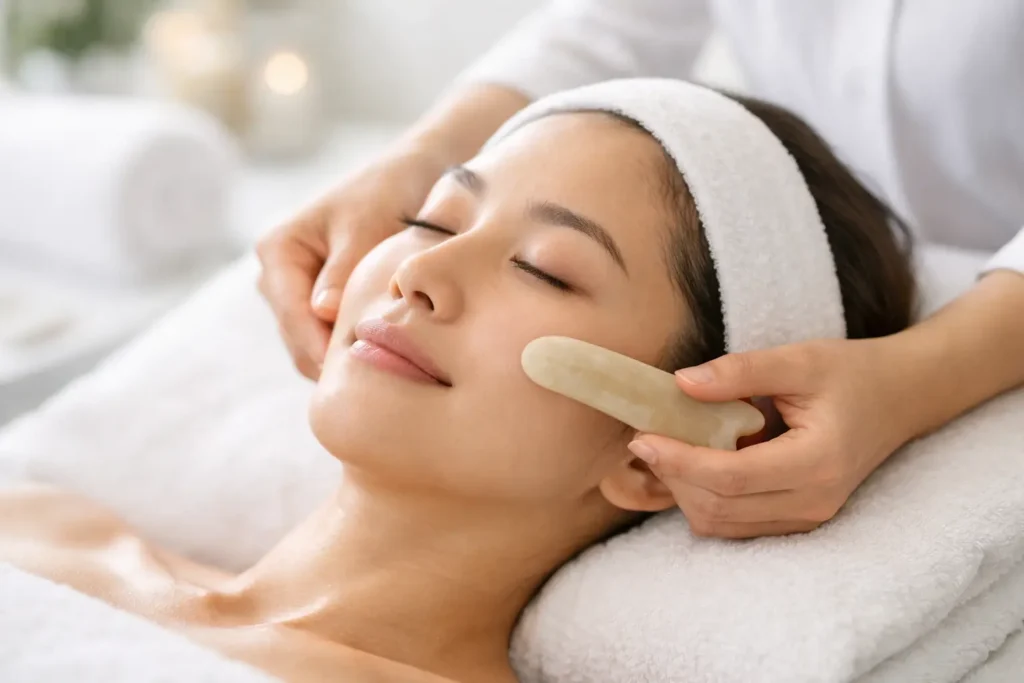
Bojin is a massage-based technique that works along points and pathways commonly associated with facial tension, circulation and drainage. Depending on the treatment approach, a therapist may use their hands or a smooth Bojin tool to apply controlled strokes around the forehead, brows, cheekbones, jaw, neck and shoulders.
The pressure is more targeted than the gentle effleurage many people expect from a hydrating facial. You may feel a concentrated ache around the temples, beneath the cheekbones, along the jaw or at the base of the neck. These are common places to hold tension, especially if you clench your teeth, spend long periods looking down at a mobile phone, or carry stress in your shoulders.
A good Bojin facial is not a test of endurance. You should be able to breathe normally and relax into the treatment. If you are wincing, holding your breath, pulling away, or feeling a hot, stabbing sensation, tell your therapist immediately. More pressure is not automatically better, and a comfortable treatment is more likely to help your facial muscles release rather than tighten defensively.
Why some areas feel tender
Tenderness varies significantly from one person to another and even from one appointment to the next. It can be more noticeable when you arrive tired, dehydrated, stressed or already carrying muscular tension through the face and neck.
The jaw is often the most sensitive area. Teeth grinding, chewing, speaking all day and unconscious clenching can leave the masseter muscles feeling tight. Gentle, progressive work here may feel intense in the beginning, then ease as the area relaxes. The area around the brows and temples can also feel tender for people who spend many hours focusing on screens or experience regular tension headaches.
Your skin condition matters too. If your skin is sensitised, inflamed, sunburnt or actively breaking out, certain movements may feel uncomfortable and may not be appropriate. A professional therapist should assess your skin before beginning, then adapt the pressure and technique rather than following a fixed routine.
What a comfortable Bojin facial should feel like
There is a useful difference between therapeutic pressure and pain. Therapeutic pressure feels specific, manageable and temporary. It may create a mild ache in a tight spot, but the feeling should settle quickly when the therapist moves on. Many clients describe a warm, relaxed sensation afterwards, with the face looking less puffy and feeling more refreshed.
Pain, by contrast, tends to feel sharp, burning, pinching or increasingly unpleasant. It can make your body brace. If you feel anxious about the next stroke, the pressure is too strong or the treatment needs adjusting.
At Eros Beauty and Wellness, comfort should begin before the facial itself. Tell your therapist if it is your first Bojin session, if you prefer a lighter touch, or if you have a particular concern around your jaw, neck or skin sensitivity. This gives them the information they need to tailor the session with greater care.
Pressure should build gradually
A considerate therapist does not start at maximum pressure. They warm up the skin and muscles first, observe how you respond and gradually deepen the technique only where appropriate. This approach is particularly helpful for first-time guests, who may not know how their face will react to targeted massage.
Communication also matters throughout the session. A brief check-in is enough: “Is this pressure comfortable?” Be honest rather than polite. Your preference is valuable information, not a complaint.
Will you be sore afterwards?
Most people do not feel significant soreness after a Bojin facial. You may notice mild tenderness in areas that were especially tight, similar to the awareness you feel after a focused massage. This should be short-lived and should not interfere with your normal day.
Some temporary redness is also possible, particularly in reactive skin or after more stimulating massage strokes. It usually settles naturally. Plan a gentler evening after your first appointment if you are unsure how your skin responds, and avoid trying several new active skincare products straight afterwards.
Drink water, keep your home routine simple, and use the calming products recommended for your skin type. There is no need to scrub, exfoliate or use very hot water to chase a “better” result. Your skin benefits most from a calm recovery period.
When Bojin may not be suitable
A Bojin facial is not right for every skin condition or every day. Let your therapist know if you have had recent facial injectables, cosmetic procedures, dental work, a skin peel, laser treatment or surgery. You should also mention active eczema, severe acne inflammation, broken skin, cold sores, unexplained rashes, facial nerve concerns or any condition that affects sensation or healing.
If you take medication that causes easy bruising, have a bleeding disorder, or are managing a medical condition, seek appropriate medical advice before booking a deep facial massage. Pregnancy, too, is a reason to mention your circumstances so the treatment can be considered and adapted carefully.
This is not about making a facial feel clinical or intimidating. It is about protecting your comfort and ensuring that your chosen treatment suits what your skin and body need at that moment. Sometimes the best choice is a gentler classic facial, hydration-focused care, or simply postponing intensive massage until your skin has settled.
How to prepare for your first session
Come as you are, but avoid arriving immediately after a harsh exfoliant, strong retinoid application or prolonged sun exposure. If you wear contact lenses and are sensitive around the eye area, you may find it more relaxing to remove them beforehand.
Try not to treat the appointment as something you must “tolerate” to earn visible results. A Bojin facial works best when you allow your shoulders to drop, soften your jaw and let your therapist know what you are feeling. The aim is to support a rested, more defined and refreshed appearance through professional technique, not force.
It is also sensible to begin with a lighter-to-medium pressure if you are new to Bojin. You can always choose more focused work at later appointments once you understand which areas hold tension and how your skin responds.
The result should feel restorative, not punishing
Bojin facials appeal to people who want more than surface-level relaxation. The treatment can be especially satisfying when your face feels puffy, your jaw feels overworked or your expression seems tired after a demanding week. Yet its value lies in the balance between effective technique and attentive care.
The best session leaves you feeling looked after, not overwhelmed. Take time to share your concerns at the start, let the therapist set a pressure that feels right for you, and give yourself permission to ask for an adjustment. Your facial should be a moment to restore comfort as well as confidence in your skin.