


Uncategorized
How Bojin Facial Works for Firmer, Brighter Skin
Jul
A face can look tired long before you feel tired. It often shows up as puffiness around the eyes, heaviness along the jawline, dullness across the cheeks, or skin that seems less lifted than it used to. If you have been wondering how bojin facial works, the answer begins with something many people overlook – facial tension. When muscles feel tight and circulation is sluggish, skin can appear less fresh, even with good skincare at home.
Bojin facial is a treatment rooted in traditional meridian-based techniques, combined with modern facial care. Rather than relying only on creams or machines, it uses precise pressure and massage movements, often with a smooth tool, to work along the face, neck and sometimes scalp. The goal is to encourage circulation, release areas of tightness, support lymphatic drainage and help the skin look more rested, defined and radiant.
How bojin facial works beneath the surface
At first glance, bojin facial may look like a massage-focused treatment. In practice, it is more intentional than a standard facial massage. The therapist follows pressure points and meridian pathways with controlled movements designed to stimulate the skin and the tissue beneath it.
This matters because skin does not sit in isolation. Beneath it are muscles, connective tissue, blood vessels and lymphatic channels. When these structures are congested or tense, the face can hold fluid, develop uneven tone or appear more drawn. By applying repeated, targeted strokes, bojin facial helps wake up local circulation and encourage the movement of stagnant fluid.
Many clients notice that their face feels lighter afterwards. That feeling is often linked to reduced puffiness and less tightness around common holding areas such as the brow, temples, cheeks and jaw. Better circulation can also give the complexion a healthier glow, while drainage may help the contours of the face look cleaner and less swollen.
What happens during a bojin facial
A good bojin facial is not rushed. It usually begins with cleansing, so the skin is properly prepared and any makeup, sunscreen or daily build-up is removed. Depending on the treatment design, gentle exfoliation may follow to help smooth the skin’s surface and support better absorption of products used later.
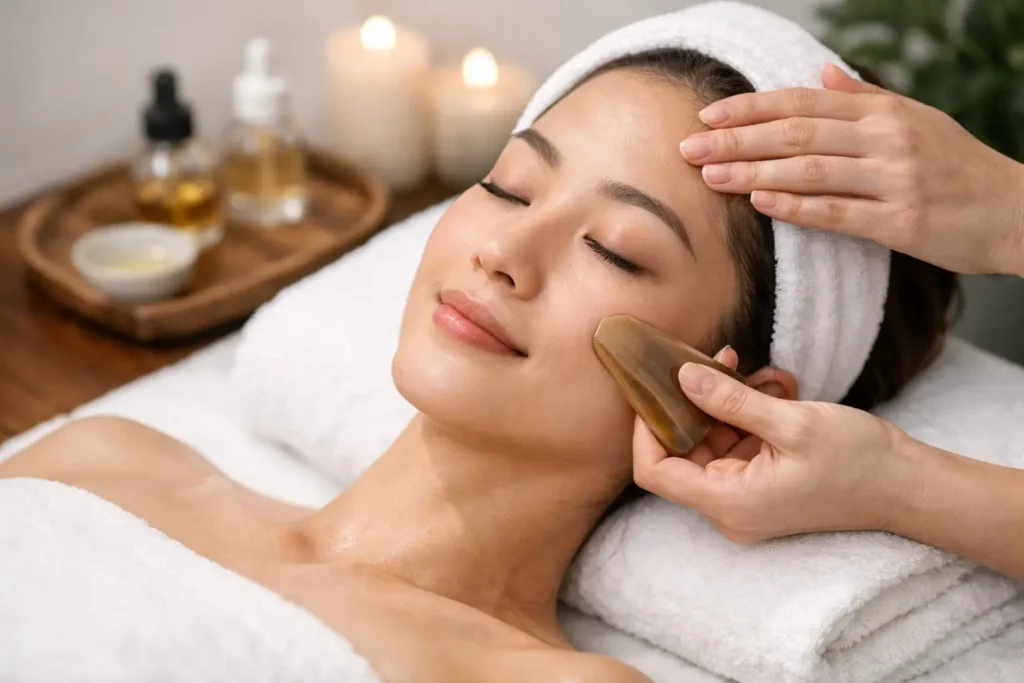
The bojin portion is where the treatment becomes more distinctive. A therapist uses either the hands or a specialised bojin tool to glide and press along key facial areas. The pressure is firm but controlled. It should feel purposeful, not harsh. Some areas may feel more tender than others, especially if you carry tension in the jaw or forehead, but the sensation is usually manageable and often becomes more comfortable as the muscles begin to relax.
Work typically extends beyond the cheeks alone. The neck is important because fluid and tension do not stop at the chin. Releasing the neck area can support drainage and help the face respond better. Some treatments also include the shoulders or scalp, which can be especially helpful for clients who spend long hours at a desk or tend to clench their jaw.
After the massage phase, soothing serums, masks or finishing products may be applied. This combination is one reason the treatment appeals to clients who want both a wellness experience and visible skin benefits. It is not simply about pressure techniques. It is also about creating the right conditions for the skin to calm, hydrate and recover.
Why the face can look more lifted after treatment
One of the most common reasons people book this treatment is because they want a more sculpted, refreshed look without anything invasive. That is where understanding how bojin facial works becomes especially useful.
The lifting effect is usually not about changing facial structure. It is more about reducing the factors that make the face look heavier. Puffiness can blur the jawline and cheek area. Muscle tightness can pull features downward or create an expression of fatigue. Poor circulation can leave the complexion flat. When the treatment addresses these issues, the face may appear firmer, brighter and more defined.
Results vary from person to person. If someone is mainly dealing with temporary puffiness or stress-related tension, the change can be quite noticeable immediately after one session. If the concern is more linked to long-term skin laxity, a single facial may still give a fresher look, but a course of treatments and good home care will usually be the better approach.
Who tends to benefit most
Bojin facial can suit a wide range of adults, especially those who feel their face looks puffy, tired or tense. It is often a good match for working professionals, frequent screen users and anyone who notices jaw tightness, temple pressure or a dull complexion. Mature skin can also benefit because improved circulation and regular facial stimulation can support a healthier overall appearance.
It may be especially appealing if you prefer hands-on treatments and want visible care without an aggressive feel. Some clients enjoy machine-based facials, while others want something more soothing and restorative. Bojin sits comfortably in that second category, though it can also be part of a broader results-focused skin routine.
That said, it is not for every situation. If you have active skin inflammation, broken skin, certain medical conditions, recent injectables or a very reactive complexion, the treatment may need to be adjusted or postponed. A responsible therapist should ask the right questions before beginning and explain whether the pressure used is suitable for you.
What bojin facial can and cannot do
This is where honest expectations matter. Bojin facial can help the skin look brighter, reduce the appearance of puffiness, ease facial tension and support a more refined facial outline. It can also leave you feeling deeply relaxed, which has value in itself. When stress levels are high, that tension often shows on the face.
What it cannot do is replace medical treatment for significant skin conditions or produce the same effect as advanced aesthetic procedures aimed at deeper structural change. If someone expects one session to erase pronounced wrinkles or dramatically tighten loose skin, they may be disappointed. The real strength of this treatment lies in improvement that looks natural – fresher skin, softer tension, better circulation and a face that appears more awake.
For many clients, that is exactly the result they want. They are not looking to look different. They want to look well-rested, cared for and more like themselves on a good day.
How often should you have one?
It depends on your goals. If you are preparing for an event or want a quick refresh, a single treatment can be worthwhile. If your concerns are ongoing puffiness, tension or a generally tired complexion, regular sessions tend to give better results than one-off appointments.
A therapist may recommend starting closer together, then spacing appointments out for maintenance. This approach makes sense because circulation and tension patterns are not fixed permanently after one visit. Lifestyle still matters. Sleep, stress, hydration, salt intake and skincare habits all influence how your face looks between treatments.
At home, simple habits can help maintain the benefits. Cleansing well, using suitable hydrating products, getting adequate rest and being mindful of jaw clenching all make a difference. Professional treatment works best when it supports, rather than replaces, everyday care.
How bojin facial works with other skincare treatments
Bojin facial does not have to sit in isolation. In many beauty and wellness settings, it can complement classic facials and other skin-focused treatments. For example, if your skin is both dehydrated and dull, the massage element can improve circulation while hydrating steps help restore comfort and suppleness.
For clients who enjoy a complete self-care routine, it can also fit naturally into a broader approach that includes regular facials, wellness therapies and sensible home products. This is often where a treatment becomes more than a one-time indulgence. It becomes part of ongoing maintenance.
At Eros Beauty and Wellness, this kind of treatment appeals to clients who want more than surface-level pampering. They want care that feels calming yet purposeful, with techniques that support both comfort and visible improvement.
What to expect after your appointment
After treatment, the skin often looks fresher and slightly more energised. Some people notice an immediate glow and a lighter feeling through the face. If there has been a lot of tension in certain areas, mild tenderness can happen, but it should settle quickly.
It is best to give the skin a little breathing room afterwards. Keep hydration up, avoid overloading the skin with strong active products on the same day unless advised otherwise, and pay attention to how your face feels. Many clients find that they sleep better after a deeply relaxing facial, which is a welcome bonus.
If you have been curious about how bojin facial works, think of it as a treatment that respects the connection between skin, muscle tension and circulation. It offers a gentler path to a fresher-looking face – one that reminds you that visible results and genuine comfort can belong in the same appointment.