


Uncategorized
Your Guide to Choosing Beauty Therapists Well
Oct
A facial that leaves your skin feeling comfortable, a massage that eases persistent tension, or a body treatment that supports your confidence should never feel like a gamble. This guide to choosing beauty therapists helps you look beyond attractive promotions and choose care that feels safe, personal and genuinely worthwhile.
For many people, the best therapist becomes part of an ongoing self-care routine. They learn how your skin responds, which areas hold stress, and when your needs have changed. That relationship starts with a few practical checks, but it should also feel reassuring from the moment you walk in.
Start with the result you want
Beauty and wellness treatments are most rewarding when they begin with a clear concern rather than a vague promise. You may want to restore hydration to skin that feels tight after long days in air-conditioning, soften the look of fine lines, manage congestion, relieve shoulder tension, or support body conditioning alongside a healthy lifestyle. These goals call for different skills and treatment approaches.
Before booking, ask yourself what you would like to notice after your visit and what you are hoping to improve over time. A calming facial and an advanced beauty treatment may both support radiance, but they are not interchangeable. Likewise, a relaxing massage is ideal when you need to switch off, while a meridian-focused or body detox treatment may be more suitable when fatigue, tightness and sluggishness are your main concerns.
Be realistic about timing too. Some concerns respond well to a single session, particularly relaxation and surface hydration. Others, such as uneven texture, recurring congestion or body contouring support, often benefit from a considered programme and consistent home care. A professional therapist should explain this without making exaggerated promises.
Look for training, experience and treatment knowledge
A polished treatment room matters, but professional knowledge matters more. Ask what training or experience a therapist has in the service you are considering, especially if it involves beauty technology, intensive exfoliation, targeted lifting methods or body-focused treatments. A capable therapist can explain what the treatment is designed to do, how it feels, who it may suit and what results are realistic.
Experience is not only about the number of years someone has worked. It is also about whether they can adapt their technique. Mature skin, sensitive skin, active breakouts, pigmentation concerns and dehydrated skin require different judgement. The same is true for massage and body treatments: pressure, pace and focus should be adjusted around your comfort, lifestyle and physical condition.
If you are pregnant, recovering from a medical procedure, taking prescribed medication, managing a skin condition or prone to allergies, say so before treatment. This is not being difficult or overly cautious. It gives the therapist the information needed to recommend a safer option, postpone a service where appropriate, or advise you to seek medical guidance first.
A good consultation should feel like care, not a sales pitch
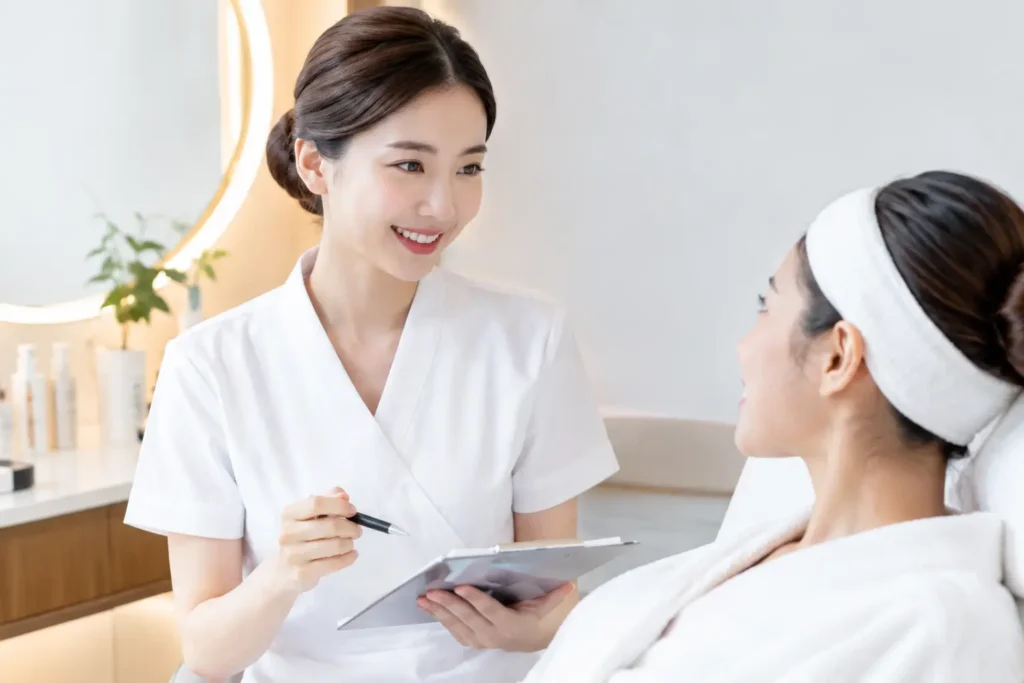
The consultation is often the clearest sign of how you will be treated as a client. It should involve more than being asked to select a package. A thoughtful therapist will ask about your concerns, current skincare, previous treatments, sensitivities, daily habits and desired outcome. They should also check how you are feeling on the day.
Pay attention to whether they listen. If you say that your skin reacts easily, your therapist should not brush past it in pursuit of a stronger treatment. If you have neck tension but dislike deep pressure, that preference should guide the session. The right therapist balances expert recommendations with your comfort and consent.
Clear explanations are another positive sign. You should understand the main steps, likely sensations, expected downtime if any, and what aftercare involves before treatment begins. There is no need for intimidating jargon. Excellent care is often simple: the therapist explains, checks in and adjusts when needed.
Hygiene, privacy and comfort are non-negotiable
A clean, well-run beauty space protects both your wellbeing and your peace of mind. Treatment beds, tools and surfaces should appear clean and properly prepared between clients. Towels and linens should be fresh, products should be stored appropriately, and your therapist should follow suitable hygiene practices throughout the service.
Comfort has practical value as well. You are more likely to communicate honestly when you feel respected and at ease. Consider the room temperature, privacy, cleanliness, music level and whether you are given clear directions before and after your treatment. For body services, professional draping and a respectful explanation of the areas being treated are essential.
Do not ignore a feeling that something is rushed, unclear or unhygienic. You can pause, ask questions or decline a treatment at any point. A professional therapist will welcome reasonable questions and never make you feel embarrassed for having them.
How to choose a beauty therapist for your skin type
Your skin is not a fixed category. It can become drier during stressful periods, more reactive after sun exposure, or congested when sleep and routine are disrupted. This is why a one-size-fits-all facial is rarely the best long-term answer.
When considering a therapist, ask how they assess skin and how they adapt products or techniques for changing needs. For example, someone with dry, mature skin may benefit from a focus on replenishment, comfort and gentle renewal. A client with oiliness and congestion may need careful cleansing and balanced hydration, rather than harsh stripping products that leave the skin irritated.
Natural ingredients can be a welcome part of a treatment, but natural does not automatically mean suitable for every person. Essential oils and botanical extracts can still cause reactions in sensitive skin. A knowledgeable therapist will ask about sensitivities, use products thoughtfully and recommend a patch test or gentler approach when there is uncertainty.
For advanced treatments, ask what preparation is required and whether you need to avoid active skincare ingredients, sun exposure or other procedures beforehand. Good results depend on the treatment itself and on following the right preparation and aftercare.
Read reviews with a discerning eye
Reviews can reveal details that a price list cannot. Look beyond star ratings for comments about the therapist’s attentiveness, cleanliness, pressure during massage, explanation of treatments and whether clients felt comfortable returning. Consistent praise across these areas is more meaningful than a single glowing comment.
At the same time, reviews are only one part of the picture. A treatment that was perfect for another client may not meet your specific needs. Use reviews to identify businesses with a reliable service culture, then use your consultation to decide whether the therapist and treatment plan are right for you.
Convenience also supports consistency. In Singapore, choosing an outlet near your work, home or regular errands can make it easier to maintain a facial or wellness routine rather than treating self-care as a rare occasion. Eros Beauty and Wellness offers a broad range of facial, body and wellness services, which can be useful when your priorities change from skin maintenance to relaxation or targeted body care.
Understand pricing and recommendations before you commit
A therapist should be able to explain the cost of a treatment, what is included and whether there are optional add-ons. Packages can offer value when you already know that a treatment suits you and you can realistically attend the sessions. They are less helpful if you feel pressured to decide before you have experienced the service or understood the commitment.
It is reasonable to start with a single appointment, particularly at a new salon or when trying a new treatment category. Afterward, consider how your skin or body feels, whether the advice made sense and whether you felt heard. Results should be reviewed honestly. Sometimes the right next step is a repeat session; sometimes it is a simpler maintenance routine or a different treatment altogether.
Home-care recommendations should be relevant, not automatic. A good therapist may suggest products that help maintain hydration, sun protection or treatment results between appointments, while explaining why each item could help. You should never feel that purchasing a full range is the price of receiving respectful care.
Notice what happens after the appointment
Aftercare is where professional attention continues. Depending on the service, you may be advised to drink water, avoid intense heat or exercise for a period, keep your skincare gentle, use sun protection, or avoid picking at the skin. These instructions should be specific enough to follow at home.
A therapist who checks how you are doing during the service and gives clear post-treatment guidance is demonstrating the kind of care that supports better outcomes over time. Your own feedback matters too. If something felt uncomfortable, if your skin reacted unexpectedly, or if the pressure was not right, mention it at your next visit so the plan can be refined.
The right beauty therapist is not simply someone who performs a treatment well. They are someone who respects your concerns, explains your options clearly and helps you make time for the version of self-care that leaves you feeling renewed, comfortable and confidently cared for.