


Uncategorized
Can Massage Reduce Water Retention Safely?
Aug
A ring that feels tight by evening, sock marks around the ankles, or a face that appears noticeably puffier after a late dinner can be frustrating – especially when you otherwise feel well. So, can massage reduce water retention? Gentle, appropriately chosen massage may help some people feel less puffy when fluid retention is mild and temporary. It is not, however, a cure for every kind of swelling, and persistent or sudden symptoms deserve proper medical attention.
For many people in Singapore, water retention is linked to familiar routines: long hours sitting at work, hot and humid weather, salty meals, limited movement, travel, hormonal changes, or a restless night. The most helpful approach is usually a combination of gentle body care, hydration, movement, and understanding when massage is suitable.
Can Massage Reduce Water Retention?
Massage can support the body’s natural fluid movement, particularly when the swelling is mild and related to inactivity, temporary bloating, or fatigue. Light, rhythmic strokes can encourage circulation and may support lymphatic flow, the system that helps move excess fluid and waste products through the body. This is why a carefully performed treatment can leave you feeling lighter, more comfortable, and less congested.
The key word is gentle. Water retention is not something to force out through intense pressure. Deep or aggressive massage over swollen, tender tissue can be uncomfortable and may be unsuitable depending on the cause. A trained therapist should adjust pressure, technique, and the treatment area after discussing your symptoms and comfort level.
Results also vary. Massage may improve the sensation of heaviness and visible puffiness for a short period, but it will not resolve fluid retention caused by an underlying medical condition. Think of it as supportive maintenance rather than a standalone solution.
Why the Body Holds On to Fluid
Fluid naturally moves between blood vessels and body tissues. When that balance is temporarily disrupted, fluid can collect under the skin, often around the feet, ankles, hands, abdomen, or face. This is commonly called oedema or water retention.
Everyday triggers are often manageable. A salty restaurant meal may lead to next-day puffiness. Sitting through meetings without standing up can leave the lower legs feeling heavy. Hormonal changes around menstruation can cause temporary breast tenderness, bloating, and swelling. Long-haul flights, warm weather, and dehydration can also contribute.
Yet not all swelling is routine. Some medicines, including certain blood pressure treatments, can cause ankle swelling. Problems involving the heart, kidneys, liver, veins, thyroid, or lymphatic system can also lead to oedema. That is why it is wise not to assume that every swollen ankle simply needs a massage.
The Massage Techniques That May Help
For temporary puffiness, a therapist may use slow, light techniques directed towards the body’s natural lymph node areas. This is sometimes described as lymphatic-style massage. The pressure is much lighter than a sports massage because lymph vessels sit close to the skin’s surface. The aim is to support fluid movement without straining the tissue.
A relaxing body massage can also be helpful when stress and muscle tension are part of the picture. Stress does not directly cause all water retention, but poor sleep, reduced movement, comfort eating, and prolonged tension can make the body feel more sluggish. Gentle massage may help you unwind, ease muscle tightness, and make it easier to return to healthier daily habits.
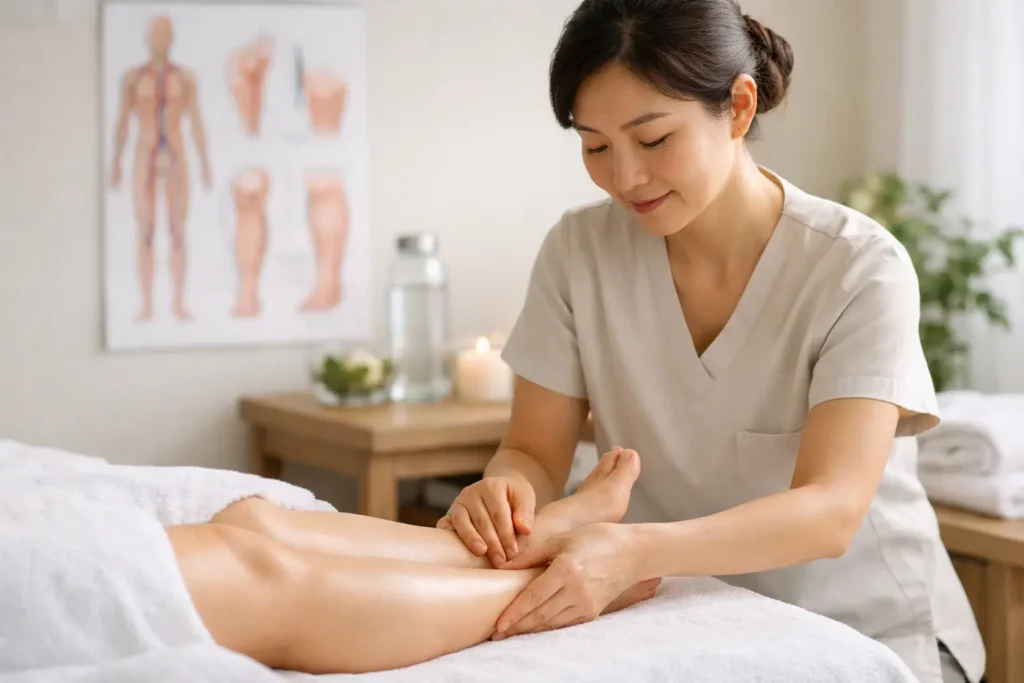
For legs that feel tired after standing or sitting for extended periods, a treatment may incorporate comfortable strokes to support circulation alongside calming work on the feet, calves, and lower back. The benefit is often less about dramatic centimetre loss and more about comfort, relaxation, and a refreshed feeling.
At Eros Beauty and Wellness, a consultation-led body wellness session can help identify whether a relaxing massage or a Meridian Body Detox Treatment is more appropriate for your current comfort and wellness goals. A responsible treatment should never promise to medically treat oedema or replace advice from a doctor.
What Massage Cannot Do
Massage does not permanently remove body fat, repair damaged veins, or treat a blocked lymphatic system without specialist guidance. It should not be used to explain away unexplained swelling. Be cautious of claims that one treatment can “detox” large amounts of fluid or create lasting weight loss overnight. Changes on the scale after a massage are more likely to reflect normal shifts in fluid, food intake, or bowel movements than a meaningful change in body composition.
If you have diagnosed lymphoedema, have had lymph nodes removed, or are receiving cancer treatment, seek advice from your doctor or a qualified lymphoedema therapist before booking a massage. Your care needs may be more specialised than a standard wellness treatment.
When to Avoid Massage and Seek Medical Advice
Do not book a massage for sudden, unexplained, or painful swelling. Medical assessment is particularly important if one leg becomes more swollen than the other, or if the area is red, warm, tender, or firm. These symptoms can sometimes indicate a blood clot or infection and need urgent attention.
Seek urgent medical help if swelling comes with shortness of breath, chest pain, dizziness, coughing up blood, or a racing heartbeat. Similarly, arrange a medical review if swelling is persistent, worsening, appears during pregnancy, or is accompanied by a rapid change in weight, reduced urination, or severe fatigue.
Even when the cause seems obvious, mention relevant health information before treatment. This includes varicose veins, diabetes, heart or kidney conditions, recent surgery, skin infections, medication use, pregnancy, and previous blood clots. A professional therapist will welcome this information and may advise postponing treatment where necessary.
Make the Benefits Last Beyond the Treatment Room
A massage is most useful when it complements small, consistent habits. After a gentle body treatment, drink water as you normally would rather than attempting to overdrink. Hydration helps the body regulate fluid balance, while excessive water intake is not necessary and can be unsafe for some people with health conditions.
Move regularly throughout the day. A brief walk, calf raises while waiting for the kettle, or standing up between tasks can help prevent fluid from pooling in the lower legs. If you work at a desk, avoid staying in the same position for hours at a time. On flights or long car journeys, make time to stretch and walk when it is safe to do so.
It can also help to notice patterns rather than blaming one meal or one treatment. If puffiness reliably follows salty food, alcohol, poor sleep, or your menstrual cycle, a simple note on your phone can reveal what your body responds to. Focus on balanced meals with fibre-rich foods, adequate protein, and naturally potassium-containing foods such as leafy greens, beans, yoghurt, and bananas, unless you have been advised to limit potassium.
Compression stockings may be recommended for some people with leg swelling or vein concerns, but choose them with guidance from a pharmacist or clinician. Elevating the legs for a short time after a demanding day can also be comfortable, provided it suits your health needs.
Choosing a Treatment With Confidence
A good wellness experience begins with clear communication. Before your appointment, describe where you feel swollen, when it began, whether it changes through the day, and any medical conditions or medications you have. Ask what pressure and techniques will be used, and speak up if anything feels painful or overly intense.
For ordinary, occasional puffiness, massage can be a restorative part of your self-care routine. It offers a pause from the pace of work and family life while supporting a feeling of comfort in your body. When swelling is new, one-sided, painful, or persistent, let medical care come first – then return to nurturing body treatments with greater confidence and peace of mind.