


Uncategorized
Facial Treatments to Improve Skin That Work
Jun
A good facial should do more than feel relaxing for an hour. If your skin is looking tired, congested, dry or uneven, the right facial treatments to improve skin can help reset it in a way that home care alone often cannot. The key is choosing a treatment that matches your skin condition, your comfort level and the kind of results you want to maintain.
Many people book facials only when a breakout appears before an event or when their complexion starts to look flat and stressed. That can help in the short term, but skin usually responds best to consistent care. A well-chosen treatment plan can support hydration, clarity, firmness and overall radiance while also giving your skin time to recover from daily exposure to heat, pollution, make-up and long working hours.
How facial treatments to improve skin actually help
A professional facial works on several levels at once. It cleanses more deeply than a standard at-home routine, softens built-up debris in the pores, encourages circulation and delivers active ingredients more effectively. Depending on the technique used, it may also help calm sensitivity, improve the look of fine lines or support a brighter, more even tone.
That said, no single facial does everything. Someone dealing with oiliness and blocked pores will not usually need the same approach as someone concerned with dryness and early signs of ageing. The best results tend to come from understanding what your skin is asking for now, rather than chasing the most advanced-sounding treatment on the menu.
Choosing the right facial for your skin concern
If your skin often feels tight, looks flaky or loses its glow by midday, a hydrating facial is usually the most sensible place to start. These treatments focus on replenishing moisture, reinforcing the skin barrier and helping the face look fresher and smoother. Hydration-focused facials are often gentle enough for many skin types, including those who are new to regular treatments.
For congestion, blackheads and recurring breakouts, deep-cleansing facials can be more helpful. These typically combine exfoliation, softening steps and careful extraction to clear blocked pores without overwhelming the skin. Done properly, they can leave the complexion looking cleaner and calmer. Done too aggressively, they may cause irritation, so the therapist’s technique matters just as much as the treatment itself.
If your main concern is dullness, uneven texture or post-blemish marks, exfoliating or brightening facials may be recommended. These are designed to lift away dead skin build-up and support fresher-looking skin underneath. They can be effective, but they also require sensible aftercare. Skin may be more sun-sensitive afterwards, so daily SPF is non-negotiable.
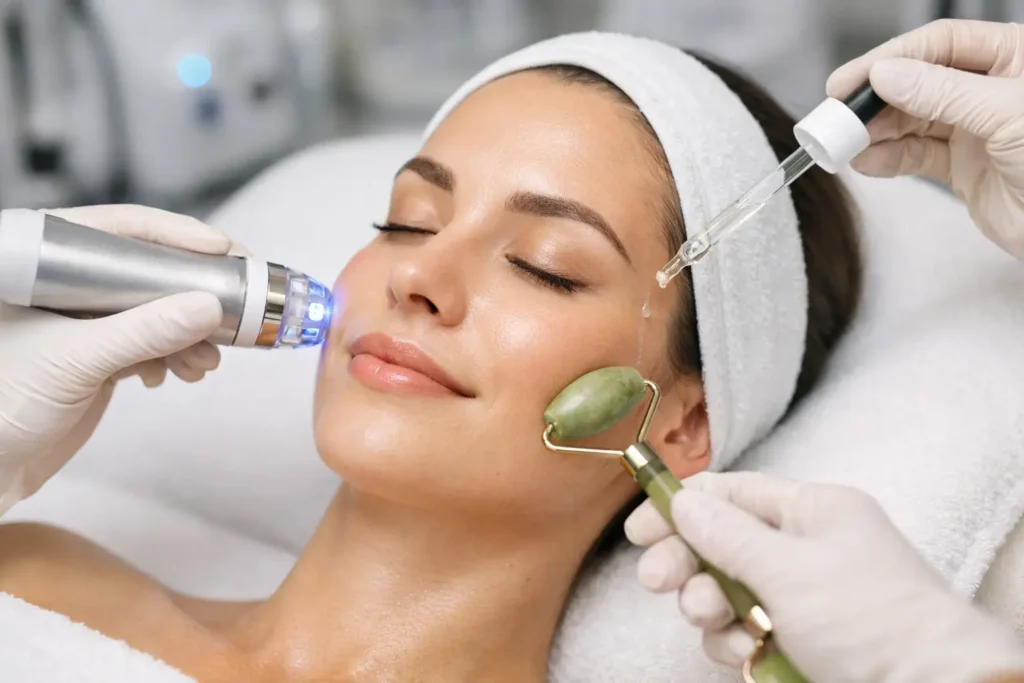
For loss of firmness or fine lines, anti-ageing facials usually focus on stimulating the skin through massage, technology or targeted serums. Treatments such as nano pulse therapy or firming facials may support a smoother, more rested appearance over time. Results are often gradual rather than dramatic, which is worth knowing before you book. Good anti-ageing care is usually about consistency, not a one-off miracle.
Classic facials versus advanced treatments
A classic facial remains a strong option for many people, especially if your skin needs maintenance rather than correction. It generally includes cleansing, exfoliation, steam or pore-softening, extraction if needed, massage and a mask suited to your skin condition. The strength of a classic facial is balance. It refreshes the skin, supports circulation and gives your therapist a chance to assess changes in your complexion.
Advanced facials tend to be more targeted. They may use specific techniques, tools or technologies to address concerns such as dehydration, sagging, clogged pores or reduced skin vitality. These treatments can offer more visible results for some concerns, but they are not automatically better for everyone. If your skin is sensitive, reactive or already over-exfoliated, a simpler facial may give a better outcome.
This is where an experienced consultation makes a difference. A polished service should never make you feel rushed into the strongest treatment available. The better approach is to explain what your skin needs, what the treatment can realistically do and whether you will benefit more from one session or a course.
The role of massage-based facial techniques
Not every skin-improving facial depends on machines. Hands-on techniques can be remarkably effective, particularly when tension, sluggish circulation and puffiness affect the face. Facial massage methods such as Bojin Facial or Face Bojin are often chosen by clients who want both visible freshness and a deeper sense of release.
These treatments work through pressure, movement and meridian-focused techniques to encourage circulation and support lymphatic flow. That can help the skin look brighter and less puffy while also easing the heaviness that often settles around the jaw, brow and cheeks after stressful weeks. For clients who hold a lot of tension in the face, the treatment experience itself can be part of the result.
Massage-based facials are especially appealing if you want skin support with a wellness element. They are not a replacement for every advanced treatment, but they can sit beautifully within a long-term routine, particularly when your complexion looks tired rather than severely problematic.
What to expect from a good treatment plan
The most satisfying results usually come when your facials are treated as part of ongoing skin maintenance, not emergency rescue. For example, congestion may improve after one deep-cleansing facial, but if your skin is regularly exposed to sweat, SPF, city pollution and long days in air-conditioned spaces, those pores will need continued support.
A therapist may suggest starting with a few closer-together sessions and then moving to maintenance appointments. That can be especially helpful for dehydration, uneven texture or post-breakout recovery. The pace should still feel realistic for your schedule and budget. A professional recommendation should feel supportive, not pushy.
Home care also matters. Even an excellent facial cannot fully compensate for sleeping in make-up, skipping SPF or using harsh products that strip the skin barrier. The treatment room gives your skin a stronger foundation, while your daily routine helps protect the progress.
When more treatment is not better
One of the most common mistakes in skincare is assuming that stronger means more effective. Skin that is repeatedly scrubbed, over-extracted or exposed to too many active treatments can become inflamed, shiny in the wrong way and harder to manage. If your face stings easily, flushes often or feels irritated after cleansing, your skin may need repair before it needs intensity.
This is why honest assessment matters. There are times when a calming, restorative facial is more useful than an aggressive brightening one. There are also times when combining too many treatments too quickly leads to setback rather than improvement. Good care respects the skin’s limits.
Signs you’ve found the right place for facial treatments to improve skin
The experience should feel attentive from the start. Your concerns should be heard clearly, your skin should be examined properly and the treatment should be explained in simple language. You should know what is being used, what sensation to expect and what kind of result is realistic afterwards.
Comfort matters too. When clients feel at ease, they are more likely to return regularly, and regularity is where many of the best skin changes happen. A trusted beauty and wellness partner will focus on visible improvement while also making time for care, reassurance and thoughtful aftercare advice.
In a busy city routine, that balance is valuable. Many clients want results, but they also want a space where they can step away from the pace of the day and let someone experienced look after their skin properly. That is part of why treatment environments such as Eros Beauty continue to appeal to women who want both expertise and comfort in one visit.
How to decide what to book first
If you are unsure, start with your main concern rather than your ideal end result. If your skin feels rough and clogged, begin with cleansing and rebalancing. If it feels dry and dull, choose hydration and barrier support. If it looks tired, puffy and tense, a massage-led facial may be the better first step.
You do not need a complicated plan on day one. You need a treatment that suits your skin as it is now, delivered by someone who understands how to build results carefully. Skin responds well to patience, and often the healthiest glow comes from steady, well-judged care rather than chasing instant perfection.
Taking time for yourself should feel worthwhile. The right facial does not just improve how your skin looks in the mirror that evening. It helps your complexion behave better in the weeks that follow, and that is often where the real value begins.